
'China is struggling to get out of its property bubble.' 'Japan took 35 years to walk out of its equity bubble.' 'Bubbles can be difficult to forecast.'

The Securities and Exchange Board of India (Sebi) has proposed stricter eligibility criteria for adding and retaining stocks in the futures and options (F&O) segment, which accounts for the bulk of the trading volumes. The proposal-which comes six years after the securities regulator last revised the stock selection framework---is much awaited by the market players as the derivatives stock list has largely remained stagnant for the last two years.

The market regulator's newly proposed selection criteria for the over Rs 400-trillion-a-day futures and options (F&O) market could pave the way for the entry of popular stocks such as Life Insurance Corporation (LIC) of India, Jio Financial Services, Zomato, Paytm, DMart, and Adani Energy into the derivatives segment. The Indian derivatives market, which accounts for most of the trading volumes, could see big churn with over two dozen exits from the current list of 182 stocks due to an upward revision in the eligibility thresholds.

In a bid to expedite the processing of initial public offerings (IPOs), the markets regulator will now seek additional information from lead managers (LMs) when they file draft documents. Last week, the Securities and Exchange Board of India (Sebi) sent a letter to bankers, listing over two dozens of new disclosure requirements. The average time Sebi takes to clear the draft red herring prospectus (DRHP) - a document companies must file before accessing public funds - has dropped to less than three months in 2024 (until May 31).

Three leading domestic voting advisory firms are not on the same page over the proposed demerger and separate listing of ITC's hotel business, ITC Hotels. Institutional Investor Advisory Services (IiAS) has recommended a vote "against" the resolution, while InGovern and Stakeholders Empowerment Services (SES) have advised their clients to vote in favour. Voting on the resolution is currently underway.

Certain foreign portfolio investors (FPIs), which operate as pooled investment vehicles (PIVs), may not be exempt from the additional disclosure mandates by the Securities and Exchange Board of India (Sebi) following an update in the standard operating procedures (SOPs) for custodians. An updated version of the SOPs has specified several conditions to be met for PIVs to benefit from the exemptions granted. These include no segregated portfolios, independent investment manager, and investors having pari-passu (equal) rights in the entity.

The directions follow a report by the Indian Cyber Crime Coordination Centre, which has seen a new pattern of transnational cyber-enabled financial fraud and investment scam, impersonating as stockbrokers and company executives.

'We emphasise the importance of not basing investment decisions solely on electoral outcomes.' 'Instead, focusing on investing in high-quality businesses capable of prospering regardless of the political landscape is paramount.'

Domestic bourse BSE has approved the acquisition of a 50 per cent stake in index provider Asia Index (AIPL) from equal joint venture partner S&P Dow Jones (SPDJ) Indices for Rs 30 crore. AIPL, the index provider, is responsible for compiling and maintaining the widely followed Sensex, Bankex, and other indices. Passive funds with assets of nearly Rs 2 trillion are benchmarked with indices provided by AIPL.

In a step towards investor awareness, the Securities and Exchange Board of India (Sebi) has directed companies planning to launch initial public offers (IPOs) to release a 10-minute video containing key information related to the issue. The initiative is to make it easier for investors to understand the features of the public issue and the company.
'MIIs or market intermediaries shall enter into an appropriate agreement with entities with whom they intend to share real-time price data.'
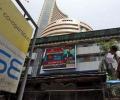
The stock exchange BSE has called off the merger of its unit at the Gujarat International Finance Tec-City International Financial Services Centre (GIFT IFSC), India International Exchange (India INX), with NSE International Exchange (NSE IX), a similar unit floated by rival National Stock Exchange (NSE), according to sources familiar with the development. BSE and NSE had been in discussions for the merger for over a year, but it has yielded no results, they said.

The top 100 companies have accounted for 63% of the gains (Rs 51 trillion out of Rs 81 trillion), while firms beyond the top 100 have contributed 37 per cent (Rs 30 trillion).

In a bid to ease compliance towards companies planning public offers (IPOs), the Securities and Exchange Board of India (Sebi) has notified norms that open more avenues to meet the minimum promoters' contribution (MPC). The market regulator has permitted promoter group entities and non-individual shareholders to contribute to the mandated promoters' contribution in the case of a shortfall without being identified as a promoter.
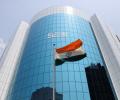
The change will help companies address market rumours without being worried about the impact on deal pricing.

'When there are no good roads and no buses plying to villages, your spending on development is skewed.'

Following the end of the grandfathering period given to India Inc to replace their independent directors who had already served for 10 years, certain companies have come up with unique ways to replace the old guard.

BSE (formerly Bombay Stock Exchange) has seen its market share go past the critical 20 per cent mark in the derivatives segment, intensifying its battle with bigger rival - the National Stock Exchange (NSE) - which, less than a year ago, had a monopoly in this space. In April, the average daily trading volume (ADTV) for BSE stood at Rs 89 trillion, accounting for 20.6 per cent of the overall ADTV of Rs 432 trillion (based on notional volumes for options).

The financial numbers for 2023-24 (FY24) of the four pure-play listed asset management companies (AMCs) have enthused the Street. All firms listed robust growth in net profit and revenue both during the January-March quarter (Q4) of FY24, as well as in full FY24. The strong performance comes amid a positive growth environment for the sector, led by tailwinds such as sharp growth in assets under management (AUM) and robust performance in equity offerings.

Stock exchanges are expanding the buffet of index derivatives even as the number of stocks permitted to trade in this space, generating an average daily turnover of Rs 450 trillion, is shrinking. This week, the National Stock Exchange (NSE) started issuing futures and options (F&O) contracts based on the Nifty Next 50 Index, bringing the total count of index derivatives to five.
 © 2026 Rediff.com - Investor Information - Advertise with us - Disclaimer - Privacy Policy - Sitemap - Feedback - About us - Terms of use - Grievances